![derivita-logowhite (2).png]](https://support.derivita.com/hs-fs/hubfs/derivita-logowhite%20(2).png?height=25&name=derivita-logowhite%20(2).png)
What's in it for you? The moment you give an assessment — even a few questions — you can see which questions tripped students up, which wrong answers they clustered on, and how each student did, question by question. It turns "they didn't do well" into "here's exactly what to reteach, and to whom."
What it gives you- Item analysis — how the class did on each question, so a hard item jumps out. Read it next to the score distribution to see the shape, not just the average.
- Answer-choice clustering — which wrong answer students landed on. When the class piles onto the same distractor, that's a specific misconception you can name and fix — not a vague "they missed it."
- Student answers, question by question — walk one student's attempt and see the actual choice they made on each item, not just the final score.
- Per-standard mastery on the assignment — which standards this assessment shows students have (or haven't) mastered.
Unlike a gradebook score, this tells you why — and points at the fix.
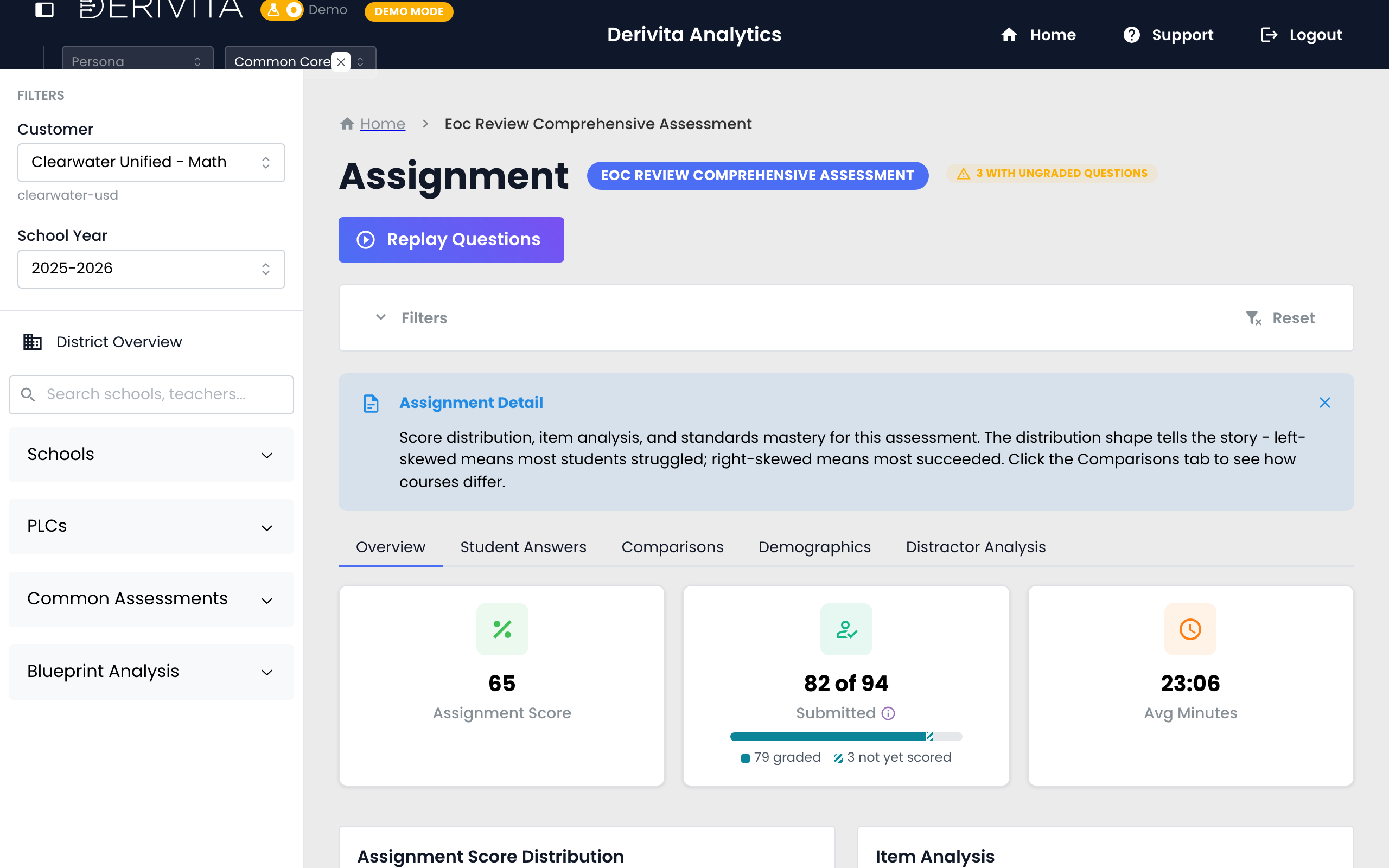
Open Question Replay on any question and you see the skill it assesses, its rigor (DOK and SOLO), and the full answer distribution — the correct choice and which wrong answers students clustered on:
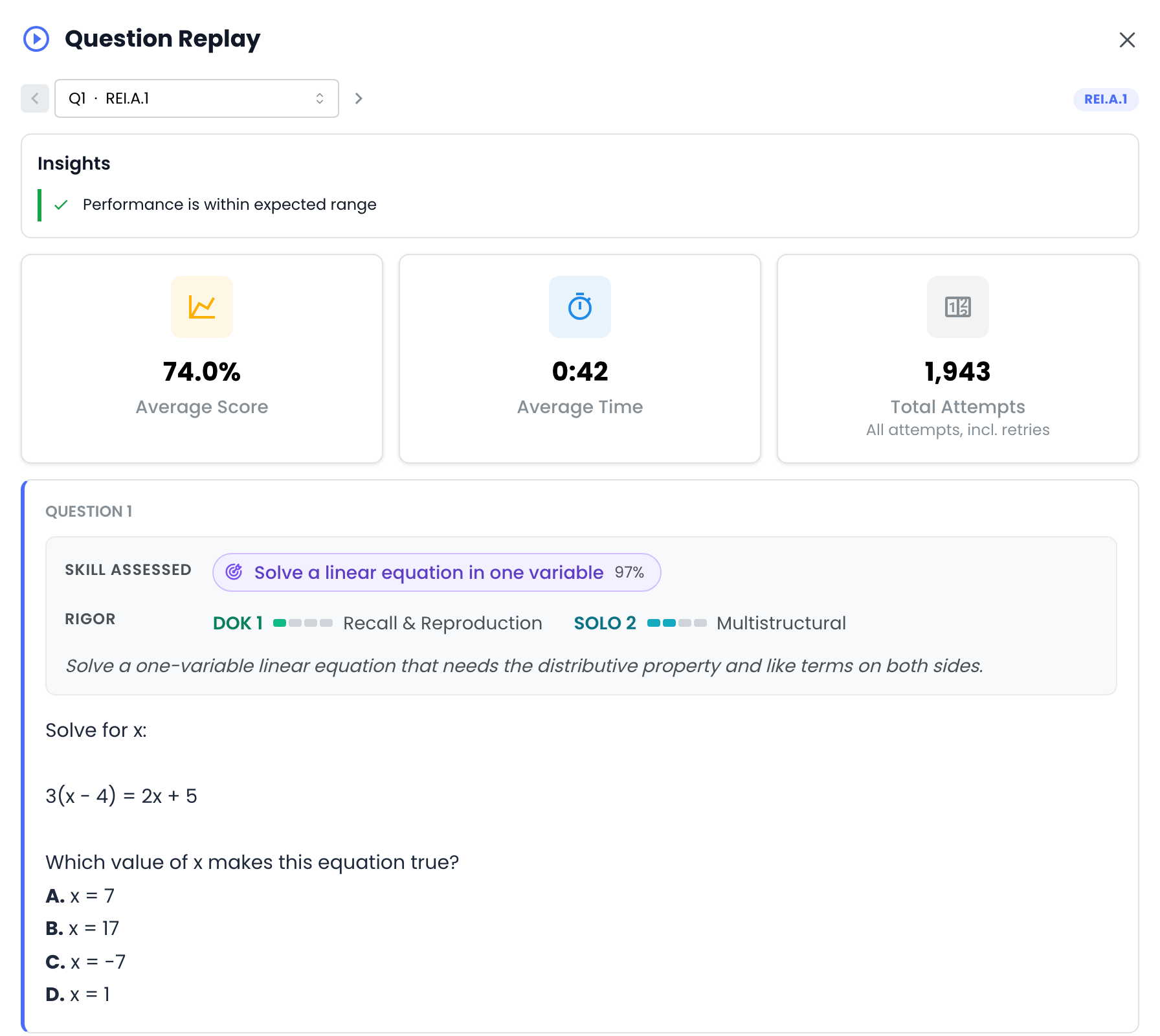
This picture comes from giving an assessment, and it can be small. A quick check or exit ticket of just a few questions already produces item analysis, answer clustering, and per-question results — so you don't have to wait for a unit test to learn something useful.
One nuance worth knowing: the item analysis and student-answer views come from any assignment students respond to. To also feed standard-level mastery (and Blueprint Analysis), assign it as a Quiz or Exam — see Blueprint Analysis for teachers.
Why it mattersA score tells you a student struggled; this tells you the specific question and the specific wrong answer they chose — so your reteach is aimed, not general. And because a useful assessment can be tiny, every quick check you give makes your next move a little clearer.
See it in the product
- How did this assignment perform? — item analysis + score distribution
- Which wrong answers are students clustering on? — answer-choice clustering
- Walk this student's attempt, question by question — one student's attempt, item by item
- Blueprint Analysis for teachers — the readiness payoff; assign as Quiz or Exam to feed it.
- What Mastery, Near Mastery, and Emerging mean